

Your house caught fire. Maybe the kitchen. Maybe it was an electrical or a grease fire that got away from somebody. Either way, you’re standing on the other side of it now, and one question sits on your chest. What do you do with this property?
That question has more answers than folks expect. Some are good. Some are expensive mistakes dressed up as good advice. This guide is for Texas homeowners who want the full picture, not just the answer that happens to benefit whoever’s selling you the next step.
Selling a Fire-Damaged House in Texas in 2026: What to Expect Before You List
The story most people tell themselves goes like this. File the insurance claim, collect a check, fix the house up, and sell it at full market value. Clean and simple. The real sequence usually looks a lot messier than that.
Insurance adjusters work from replacement cost schedules that rarely match what Texas contractors are charging right now. Construction labor costs across the state have climbed sharply in recent years. The gap between what an insurer will authorize and what a general contractor will actually accept for the job can stop a renovation dead. Homeowners find this out around week three of waiting to hear back from the adjuster. By then, they’d already turned down two cash offers because they assumed the repair route was the obvious path forward. That’s a costly assumption in a rising-cost market.
We’ve seen this play out with sellers in the Houston metro whose contractor estimate for a fire-damaged kitchen ran higher than the kitchen was worth by itself. The contractor wasn’t being dishonest; that’s simply what labor and materials cost in the area right now. In cases like that, sellers who pivot to an as-is cash sale can close in as little as two weeks, with no permits pulled and no subcontractors scheduled.
This kind of outcome doesn’t happen by accident. It happens when a seller understands every option before committing to one. The repair-and-list path makes sense for some properties. For other properties, it burns through time and money and still lands at the same destination anyway, a sale.
Texas markets aren’t doing sellers any extra favors in 2026, either. As of March 2026, recent market data put the statewide median days on market at 82 days, with roughly 30% of listings carrying price reductions and inventory running well above what’s typically considered a balanced market. A fire-damaged house in ordinary conditions is already slower to move than a comparable undamaged property. Add that kind of buyer’s market inventory, and you start to see why the timeline assumptions people make after a fire rarely survive contact with reality.
How to Sell a Fire-Damaged House in Texas: 3 Options Explained
Consider a homeowner near Katy whose garage fire didn’t touch the main living areas but sent smoke through the HVAC system, leaving that unmistakable smell in every room. Her insurance company had already sent an adjuster, and the claim was moving. Still, she didn’t want to wait a year or more, manage a renovation, then try to sell in a softened market. She wanted out, and she wanted a fair number, which is exactly what cash home buyers in Katy are set up to deliver.
Her situation is far more common than most people think. The options in front of her are the same ones in front of you, and they come down to three paths. Repair and list through a traditional real estate agent, which makes financial sense only when the numbers work. Sell as-is to a cash buyer or investor, which skips repair costs, commissions, and the holding period. Or auction, which is almost always the worst choice for the seller. Auctions are fast, but they produce low prices in front of bargain hunters who build in large contingency buffers because they can’t inspect thoroughly before bidding.
To know whether repair-and-list actually makes sense, run this math honestly. Start with the home’s after-repair value (ARV). Subtract realistic repair costs. Subtract agent commissions, typically 5 to 6% of the sale price. Subtract carrying costs while repairs drag on. Then compare what’s left against a well-negotiated cash offer.
Plenty of sellers never run that math before choosing the repair route. That’s where regret lives.
Going as-is with a direct cash buyer skips the repair costs, the commissions, and the holding period and lets you close on a timeline that fits your life. A legitimate buyer prices the necessary work into the offer up front, not into a surprise renegotiation after inspection. Reputable buyers like Sell My House Fast Now run it exactly this way: a clear offer based on the property’s real condition and no hidden fees chipped away at closing.
Why Fire-Damaged Homes Are Hard to Sell in Texas
For a long time, the assumption was that the biggest obstacle was cosmetic, that buyers see charred walls and walk. That part matters, but it isn’t the core problem.
Financing is where the real friction lives. Conventional mortgage lenders won’t fund a fire-damaged property in most cases. A buyer falls in love with a house, then discovers their lender won’t touch it until repairs are complete, and the sale collapses. That takes financed buyers almost entirely out of the equation for as-is, fire-damaged properties, leaving a much smaller pool: cash investors, developers, and house flippers. A smaller pool almost always means more negotiating pressure on price.
Smoke damage compounds the problem in ways you can’t always see. Soot particles ride through wall cavities, settle into insulation, work into ductwork, and embed in porous surfaces like drywall and wood framing. A house can smell clean after a basic cleanup and still hold odor compounds that reappear when the HVAC runs, and it always runs during an inspection. Any serious buyer hires an inspector, and any inspector worth hiring flags residual smoke damage even when the cosmetic repairs look complete.
Local code requirements add another layer. Some Texas cities mandate a full rewiring after certain electrical fires, regardless of which portion of the wiring was actually involved, or trigger systems-replacement requirements that go well beyond visible damage. Dallas is one of the cities with more strict triggers like this, which is why many homeowners choose professionals who can sell their Dallas house faster while navigating local building codes and fire-related requirements. Check with your specific municipality’s building department, since these rules vary by city and even by fire district.
Wildfire exposure is part of the broader picture, too. Texas has recorded the second-most wildfire acreage burned of any state in recent years, with roughly 1.3 million acres burned in one particularly active year, and property risk analysts flag Austin and San Antonio as high-risk metro areas. That context feeds how cautious retail buyers get about fire-damaged properties in general, even ones that have been fully repaired.
Fire Damage Report and Re-Entry Clearance in Texas: Safety Steps First
Roughly 48 hours is a common wait before a fire official authorizes re-entry into a structure with meaningful structural damage, though the exact timeline shifts with the scope of the fire and your jurisdiction. Rushing back in without clearance can create personal liability on top of the property problem you’re already solving.
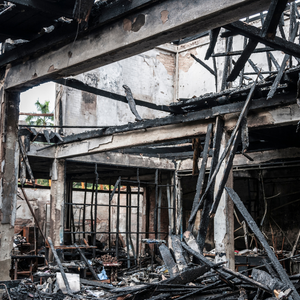
The official fire incident report comes from the fire department that responded. Houston, San Antonio, Dallas, Austin, and Fort Worth each run their own reporting process, and you or your attorney can typically request the report within a few days of the incident. Get it in writing and keep several copies, since insurers, buyers, and title companies will all ask for it.
Re-entry clearance is a separate determination from the fire report itself. Structural damage can make a property unsafe in ways the outside won’t show. A fire marshal or structural engineer may need to inspect first. A structural engineer’s assessment commonly runs $300 to $700 for a residential property, money well spent when there’s any doubt about structural integrity.
Notify your insurer before anyone else enters the property, whether that’s contractors, cleaners, or buyers. The insurer may want to send its own adjuster before debris is cleared, and unauthorized cleanup can complicate your claim.
Texas has no single statewide re-entry process. Procedures vary by municipality and sometimes by fire district. Your fire department liaison and insurance agent can walk you through the local sequence for your address.
How to Assess Fire Damage Before Selling Your Texas Home
Sellers who skip a professional damage assessment and jump straight to contractor offer often end up with inconsistent numbers and no framework for judging them. One contractor quotes just the kitchen, another quotes the whole house but misses the HVAC, and a third prices a full gut renovation when targeted restoration would do. Without an independent baseline, it’s hard to tell which offer is realistic.
A certified fire and smoke restoration assessor isn’t the same as a general contractor. This person documents damage to structural components, mechanical systems, electrical, plumbing, finishes, and contents. They pull air quality samples when smoke migration is suspected, and they find hidden damage inside walls and above ceilings that a visual inspection misses. That report becomes your anchor for insurance negotiations, contractor offers, and buyer disclosures.
Two categories deserve special attention. Structural damage is the costliest category and the one that most affects buyer confidence. Fire damage to roof decking, load-bearing walls, floor joists, or foundations changes the math fundamentally. Secondary water damage often gets overlooked. Firefighting frequently leaves more moisture in a property than the fire itself would have. If that moisture sits in walls and subfloors for a week or two without proper drying, mold follows. Mold remediation in Texas can run anywhere from a few thousand dollars for a contained area to tens of thousands for a property that’s had time to grow a widespread colony.
How to Prevent Further Damage After a House Fire in Texas
Delay is the enemy here. A back wall left open to the weather for even a couple of weeks can turn a repairable fire loss into fire-plus-water-plus-mold, roughly doubling repair costs.
Weather protection comes first. Board up openings that the fire created in exterior walls, roofs, or windows. A properly secured tarp over a compromised roof can head off thousands of dollars in rain-damage costs.
Securing the property against theft matters just as much. A fire-damaged home is a magnet for copper, appliances, and anything else that can walk. Board the windows and doors, and change the locks or install temporary padlocks. Most policies require you to protect the property from further loss.
Document everything with photos and video before any cleanup begins. Walk every room, and capture ceilings, floors, walls, and mechanical systems from multiple angles. This documentation is the foundation of your insurance claim.
Your policy may cover board-up and temporary weatherproofing under “mitigation of loss” provisions. Report the need to your adjuster and get authorization before you spend. That call takes a few minutes and can head off a dispute over thousands of dollars later. Quick tip: take dated, timestamped photos of every room before any board-up or cleanup work begins, since insurers can dispute damage claims that aren’t documented in the property’s pre-repair condition.
How to Document Fire Damage for Insurance Claims and Buyers
Most homeowner policies carry a “proof of loss” requirement with a shorter deadline than people expect, commonly 60 days from the date of loss, though this varies by policy, so check yours specifically.
Document personal property loss separately from structural damage. Build a room-by-room inventory of damaged or destroyed contents with approximate age and original cost. Receipts help, but bank statements, credit card records, and even old photos can help establish what was in the home.
Keep the fire report, the assessor’s report, and your own photo documentation in a single, organized file. You’ll hand this same package to the adjuster, to contractors bidding on the repair work, and eventually to buyers. Being organized and transparent builds buyer trust faster than anything else you can do, and having paperwork ready before the first showing saves everyone time.
- Quick tip: Keep one folder, physical or digital, with the fire report, assessor’s report, and photos together from day one, since insurers, buyers, and title companies will each ask for the same documents at different stages.
One detail catches sellers off guard. If the fire resulted in an insurance payout, the insurer may file a subrogation lien against the property if it believes a third party caused the fire, whether that’s a contractor, a neighbor, or an appliance manufacturer. That lien can appear on a title search and can delay or kill a closing until it’s resolved. Run a title check through a Texas title company early in the process, well before you accept an offer.
How to File a Fire Damage Insurance Claim in Texas Without Losing Money
It’s common to accept an insurer’s first offer, then later discover that the actual scope of damage was larger than the adjuster saw on that first visit. In Texas, you generally have the right to reopen a claim when additional covered damage turns up, but that gets harder the further you drift from the date of loss, often because hidden damage like smoke migration and secondary water damage doesn’t surface until walls are opened, which the first visual inspection rarely does.

Consider a public adjuster if the initial settlement looks low against what an independent assessor reported. Public adjusters work for you, not the insurer; are licensed in Texas; and by Texas law their fee is capped at 10% of the settlement. You can verify any public adjuster’s license through the Texas Department of Insurance.
Get every conversation with your insurer in writing. Follow verbal calls with an email summary confirming what was discussed. That kind of paper trail keeps disputes from spiraling.
Don’t cash a check marked “final payment” or “full and final settlement” without reading the accompanying documentation first. Depending on the exact language, endorsing it can count as accepting that amount as a complete settlement. If anything’s ambiguous, have an attorney review it. A modest fee can protect a much larger sum.
Fire Damage Repair Costs in Texas: 2026 Pricing Guide
It’s fair to be skeptical of a cash buyer telling you repair costs are high. That’s a reasonable thing to push back on. The honest answer is to run the numbers yourself with real contractor offers. For reference, here’s the general range the Texas restoration industry works within:
| Scope of damage | Typical cost range |
|---|---|
| Basic smoke cleanup, minor damage | ~$5,000 to $15,000 |
| Kitchen fire contained fast; adjacent smoke damage, cabinet/appliance replacement | $15,000 to $40,000 |
| Fire through roof, 2 to 3 rooms structurally affected (framing, roofing, insulation, electrical, drywall, finishes) | $80,000 to $150,000+ |
| Full structural reconstruction | Up to $200,000+ |
Hidden system costs catch sellers off guard more than the big structural line items. A whole-house HVAC cleaning and remediation after smoke infiltration runs about $3,000 to $8,000. Electrical rewiring triggered by code requirements after an electrical fire can add $10,000 to $20,000 on top of an otherwise structural-only estimate. Mold remediation, if moisture has sat too long, can independently run $10,000 to $30,000.
Then layer in holding costs during renovation. Texas property tax rates are among the highest in the country, commonly cited at around 1.6 to 1.8% annually, so a six-month renovation on a $300,000 home can add a couple of thousand dollars in property taxes alone, before insurance, utilities, or a mortgage.
Repair and List vs. Sell As-Is: Which Is Better for Your Fire-Damaged House?
The question that matters most: how much equity is in this property?
Equity drives whether the repair-and-list math actually pencils out. A homeowner with substantial equity in a home with minor-to-moderate fire damage, in a strong price-per-square-foot neighborhood, often has room to absorb repair costs and net more than an as-is cash offer. That’s a legitimate scenario where repair-and-list is the right move.
But it needs several things to line up at once: enough equity or bridge financing to fund the renovation, a realistic repair timeline that won’t drag into months of carrying costs, a contractor who delivers on schedule, and a market that rewards the finished product at the price you need.
It falls apart when any one piece breaks. Contractors miss timelines, insurance proceeds fall short, the market shifts mid-renovation, or a buyer’s conventional lender won’t fund the property without a clear certificate of occupancy. These aren’t rare events. They’re the normal friction of a complex renovation-and-sale project.
An as-is sale to a cash buyer removes most of that friction: no renovation risk, no holding period, no financing contingencies. For a property with moderate damage in a neighborhood where after-repair value doesn’t dramatically outpace repair costs, the net proceeds from an as-is cash sale and a fully repaired traditional sale can end up surprisingly close once all the real costs are counted.
Why Selling a Fire-Damaged House As-Is Is Often the Smarter Choice
The market doesn’t treat repaired fire-damaged homes the same way it treats never-damaged homes, even when the work is excellent. Texas disclosure law requires fire history to be disclosed, and even without that requirement, savvy buyers research permit history and ask neighbors. A stigma discount commonly places previously fire-damaged, fully repaired properties somewhere in the 10 to 20% range below a comparable undamaged home.
An as-is cash sale sidesteps that surprise since the buyer already prices in the fire damage, the repair costs, and the future resale stigma into the offer from the start. Cash buyers who specialize in fire-damaged properties also tend to understand the repair process better than retail buyers. They’re less likely to back out during inspection because they didn’t realize the extent of the damage.
Texas Disclosure Laws for Selling a Fire-Damaged House
Disclosure isn’t optional, and it isn’t something to strategize around. Texas requires sellers to complete the Texas Seller’s Disclosure Notice, a form mandated by the Texas Real Estate Commission, which directly asks about known defects, prior fire damage, and insurance claims. Leaving known fire damage off that form isn’t a technicality. It’s a misrepresentation, and it can expose you to a lawsuit after closing.
The disclosure requirement covers what you know. If you’ve had an assessment done and it found hidden damage, that becomes part of your known-condition record, whether or not you were legally required to have gotten the assessment in the first place. Selling as-is doesn’t eliminate disclosure obligations, either. “As-is” shapes the buyer’s expectations on repairs and price, but it doesn’t change your obligation to accurately represent what you know.
One detail trips sellers up. Claim history lives in the CLUE database, short for Comprehensive Loss Underwriting Exchange, which a buyer’s insurer will pull during underwriting. Trying to minimize or omit fire history when a CLUE report will surface it anyway sets up a failed closing and possible legal exposure. Transparency protects you more than it hurts you in a transaction involving a known fire loss.
Probate situations add a layer of complexity worth flagging. If the property is part of an estate, disclosure responsibility may fall to the executor or administrator under the Texas Estates Code. If the property is moving through the wills, trusts, and estates process, get legal guidance before signing any listing or sale agreement.
How Cash Home Buyers Evaluate Fire-Damaged Houses in Texas
Many people brace for a lowball, take-it-or-leave-it offer. With legitimate buyers, the reality tends to look different. If you’re working with a company that buys homes in Texas on a regular basis, especially one that specializes in fire-damaged properties, you’re dealing with someone who has priced this exact scenario before, not someone guessing at repair scope for the first time.
A serious cash buyer runs the same basic analysis you should: after-repair value based on neighborhood comps, minus estimated repair costs, minus acquisition and holding costs, minus a reasonable margin for risk. Whatever comes out of that math is the offer. A buyer who can’t explain how they arrived at a number probably isn’t someone to work with.
The typical process opens with a walkthrough, often under an hour, sometimes with a contractor or restoration specialist along to get a rough repair estimate on the spot. A written offer usually lands within a day or two. If accepted, the buyer handles title work and coordinates closing through a Texas title company, with no financing or appraisal contingencies since there’s no lender in the transaction.
One thing to watch for: A buyer who asks for a price reduction after their initial offer without new information to justify it. If something genuinely new surfaces during a deeper inspection, a conversation about it is reasonable. If a buyer is just chipping the price down once you’ve stopped marketing the property elsewhere, that’s worth walking away from. Reputable buyers price the condition up front. The offer you receive should be the offer you close on.
How to Get the Best Cash Offer for a Fire-Damaged House in Texas
Squeezing the most value from a fire-damaged property usually means running both paths in parallel long enough to compare real numbers, not just gut feel. Get a legitimate, detailed cash offer. Get at least two independent contractor offers on the full scope of repair. Get your insurance settlement figure in writing. Then run the actual net-proceeds calculation for each path: the cash offer as it stands, and for the repair-and-list route, after-repair value minus repair costs minus transaction costs minus carrying costs.

The gap between those two numbers tells you which path makes financial sense, and sellers are frequently surprised by how large that gap is.
A cash offer can often be negotiated upward, especially with competing offers or solid comp data. Pull recent comparable sales for your zip code from a local listing site to have a legitimate basis for a counter. Your insurance settlement figure is also useful in negotiations, since it tells a buyer something concrete about the scope of damage and the paper trail behind it. Walking into an offer conversation with your fire report, assessor’s report, and settlement summary in hand tends to close faster and at better prices than showing up without them.
Sometimes the right call isn’t about the repair math at all. In situations like an inherited rental property with fire damage, where the owner never wanted to manage a renovation or a months-long insurance negotiation from a distance, an as-is cash sale built around land value, remaining structure, and rebuild cost can make sense simply because the time and stress costs are real, even when the repair math itself might have worked out fine. Before you accept any offer, get the closing date confirmed in writing, so nothing shifts once you’ve stopped marketing the property elsewhere.
Frequently Asked Questions
How do you price a fire-damaged house?
Start with the after-repair value from recent comparable sales, then work backward: subtract realistic repair costs (based on at least two contractor bids), subtract selling costs (commissions if listing, or the implied discount if selling as-is), and subtract any outstanding liens or subrogation claims. Fire-damaged homes in Texas commonly sell at a meaningful discount, often cited in the 20 to 50% range below comparable undamaged properties, depending on the extent of damage and the submarket.
What is the hardest month to sell a house in Texas?
January tends to be the slowest month across most Texas markets, as buyer activity drops after the holidays. For a fire-damaged property, condition and price matter more than timing. A well-priced as-is sale can move any month, but listing a damaged home through an agent in January is about as unfavorable a combination as you can create.
What should you not fix before selling a fire-damaged house?
Skip cosmetic repairs that don’t add dollar-for-dollar value. Fresh paint on a wall that’ll need to be opened for electrical work is money thrown away, and curb-appeal spending barely registers when buyers and investors are focused on structural and systems conditions. Spend instead on documentation and on securing and weatherproofing the property, and let the buyer price in repair costs rather than making partial fixes that don’t move the offer.
Can I sell my fire-damaged house in Texas without a realtor?
Yes. Texas allows homeowners to sell directly, without an agent, to a private buyer or cash investor. You’ll still need a title company to handle closing and ensure a clean title transfer, and your disclosure obligations stay the same either way, but the transaction itself can happen entirely without a realtor in the middle.
Want to talk through your options on a fire-damaged property in Texas? No pressure, no obligation, just a straight conversation about what the property is worth as-is and what makes sense for your situation. Every policy, county, and property is a little different, so it’s always worth confirming specifics with your insurer or a Texas real estate attorney alongside anything here. Contact us whenever you’re ready.